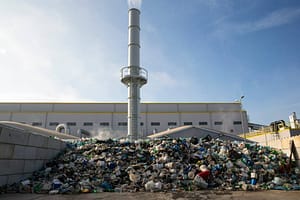




Overview of Dry Scrubbing Technology
Dry scrubbing is a method used to neutralise harmful gases in industrial emissions without the need for water, unlike wet scrubbing. It works by injecting dry sorbents (such as sodium bicarbonate or hydrated lime) into the flue gas stream.
Key Steps in Dry Scrubbing:
- Sorbent Injection: Dry sorbents are introduced into the flue gas stream, where they chemically react with acid gases like SO2, HCl, and HF, neutralising them.
- Filtration: The resulting solid particles, formed by the neutralisation process, are filtered out from the gas stream.
- By-product Removal: These solid by-products, such as neutralised salts, can be safely disposed of or reused in other industrial processes.
The effectiveness of dry scrubbing makes it an ideal solution for controlling acid gases while keeping operational costs down.
Advantages of Dry Scrubbing Technology
1. High Efficiency
Dry scrubbing achieves high removal efficiencies, particularly when paired with Glosfume’s ceramic filtration technology. Removal rates for gases such as SO2 and HCl can exceed 99%, ensuring compliance with even the strictest environmental regulations.
2. Cost-Effectiveness
Compared to wet scrubbing, dry scrubbing offers a cost-effective solution. It does not require large volumes of water, complex wastewater treatment, or heavy maintenance, reducing both CAPEX and OPEX. Additionally, fewer system components lead to lower maintenance requirements.
3. Flexibility and Scalability
Glosfume’s dry scrubbing technology is highly adaptable to various industrial setups. The system’s modular design makes it easy to scale up as production increases or emissions standards tighten, ensuring long-term flexibility.
4. Minimal Waste Production
Since dry scrubbing produces solid by-products, rather than liquid waste, it simplifies waste management. The solid particles are easier to handle and dispose of, often requiring no additional treatment before safe disposal.
Integrating Dry Scrubbing with Ceramic Filtration
The combination of dry scrubbing and Glosfume’s ceramic filtration technology provides a comprehensive solution for industries needing to reduce both particulate matter and acid gas emissions. Glosfume’s high-temperature ceramic filters, capable of operating at temperatures up to 1000°C, effectively capture the solid particles created during the scrubbing process.
For instance, sorbents like sodium bicarbonate react with acid gases, forming neutralised solid particles. Glosfume’s ceramic filters then capture these by-products before the flue gases are released into the atmosphere. This combination ensures that both acid gases and particulate matter are removed efficiently in a compact, integrated system.
Case Study: DFS Energy-from-Waste Plant
A practical example of this technology’s effectiveness is found in the DFS Energy-from-Waste (EfW) plant. Facing challenges with emissions from their waste wood boiler, DFS turned to Glosfume to retrofit their system. Glosfume’s ceramic filtration system combined with dry scrubbing technology enabled DFS to reduce particulate emissions from 180mg/m³ to just 1.5mg/m³, meeting and exceeding local environmental regulations. The system’s flexibility also ensured minimal disruption during installation and long-term reliability, significantly lowering maintenance costs.
Conclusion
Dry scrubbing, when integrated with Glosfume’s ceramic filtration technology, provides an efficient, cost-effective solution for managing acid gas emissions. This combination offers industries a scalable, flexible, and low-maintenance method to comply with tightening environmental regulations while maintaining operational efficiency.
By choosing advanced dry scrubbing and ceramic filtration systems, businesses can ensure they stay ahead of regulatory requirements, reduce their environmental impact, and future-proof their operations against evolving standards.
For more information on Glosfume’s dry scrubbing and filtration solutions, contact us today to discuss how we can help you meet your emissions goals.